

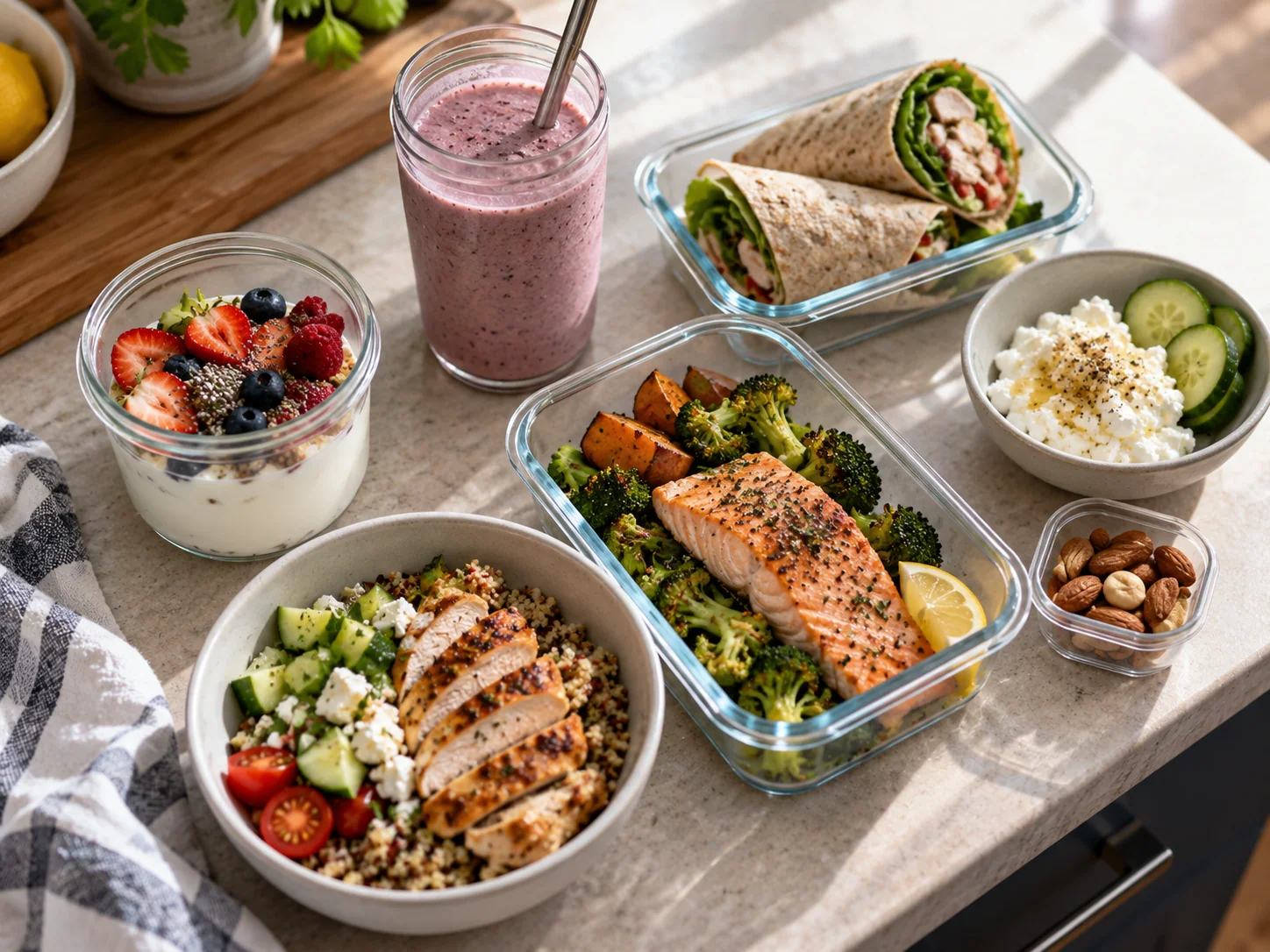
GLP-1-friendly recipes are built around protein and fiber, in portions that make sense on a smaller appetite. When medications like semaglutide or tirzepatide turn the volume down on hunger, every meal has less room for empty calories and more responsibility to deliver nutrients.
Knowing why protein and fiber matter, which foods give you the most of both, and how to build meals that are easy to eat makes it much easier to stay consistent. The recipes below cover every part of the day, from a no-cook overnight oats jar to a 25-minute shrimp skillet.
Table of Contents
Why Protein and Fiber Matter on GLP-1
Reduced appetite raises the risk of losing muscle mass along with fat, which is why protein needs go up, not down. Mayo Clinic guidance recommends 1.2 to 1.6 grams of protein per kilogram of body weight per day for people actively losing weight on these medications, compared with the standard 0.8 g/kg.
In practice, most people fall short. A study presented at the European Congress on Obesity in 2026 found that 88% of GLP-1 users missed the recommended protein minimum, and a separate study found average fiber intake at about 14.5 grams a day, roughly half the recommended 28 grams. For more on what to prioritize and what to limit, see our guide on what to eat on GLP-1.
Best Foods for GLP-1-Friendly Meals
The best foods for GLP-1-friendly meals pack a lot of protein or fiber into a small volume:
- Eggs and egg whites: versatile, quick, and easy to prep ahead
- Poultry: chicken breast and ground turkey
- Fish and seafood: shrimp, tuna, salmon, and white fish
- Dairy: Greek yogurt and cottage cheese
- Whole grains: oats, quinoa, and barley
- Vegetables: leafy greens, bell peppers, cabbage, zucchini, and broccoli
- Seeds: chia and ground flax, which add fiber in a single spoonful
Tips for Eating Well on GLP-1
- Lead with protein. Choose the protein source first, then build the rest of the plate around it.
- Add fiber where you can. A side of greens, a spoonful of chia, or a scoop of quinoa closes the fiber gap without making the meal much bigger.
- Keep portions manageable. Smaller, nutrient-dense meals are easier to finish on a reduced appetite than large plates.
- Prep ahead. Meal skipping is common on GLP-1 medications. Having a ready-made breakfast or lunch in the fridge makes it less likely.
- Go easy on heavy, spicy, and greasy food. These can worsen common GI side effects like nausea and heartburn.
GLP-1-Friendly Breakfasts
A high-protein breakfast sets up the rest of the day, especially when lunch or dinner might be smaller than usual. These breakfasts range from a no-cook jar to a 15-minute savory bowl.
High Protein Overnight Oats
These overnight oats combine rolled oats, chia seeds, ground flax, Greek yogurt, milk, and protein powder in a single jar. They are the strongest all-round recipe here, with 40 grams of protein and 10 grams of fiber in one serving, and no cooking required.
High Protein Cottage Cheese and Egg Breakfast Bowl
This breakfast bowl layers two eggs over sautéed cherry tomatoes and yellow pepper with a teaspoon of pesto, served with mixed greens and cottage cheese. It is savory, quick, and filling without feeling heavy.
High Protein Egg White Bites
These egg white bites blend egg whites with cottage cheese and top them with turkey sausage and cheddar. One batch covers breakfast for several days. Stirring in chopped spinach or peppers before baking adds fiber.
GLP-1-Friendly Lunches and Dinners
These high-protein lunches and dinners are light enough to finish on a smaller appetite and substantial enough to carry real nutritional weight.
Chicken Quinoa Bowl
This chicken quinoa bowl combines shredded chicken breast, quinoa, cherry tomatoes, bell pepper, cucumber, radish, avocado, and romaine with a light Dijon dressing. The recipe makes 10 small servings, so a full meal is two servings: about 434 calories, 30 grams of protein, and 10 grams of fiber.
Summer Shrimp Skillet
This shrimp skillet pairs marinated shrimp with zucchini, yellow squash, and bell peppers. Shrimp cooks in a few minutes, so dinner is on the table in under half an hour. The seasoning makes it fairly high in sodium, so using a little less is an easy adjustment.
Tuna Salad Lettuce Wraps
These tuna lettuce wraps swap mayonnaise for mashed avocado and lemon juice, mixed with celery, red onion, pickles, and fresh dill. They are served in butter lettuce cups, and the whole recipe takes about 10 minutes with no cooking.
Healthy Cashew Chicken Salad
This chicken salad uses a Greek yogurt dressing with coconut aminos and rice wine vinegar, mixed with red cabbage, kale, bell pepper, and carrots. It is low in fiber on its own, so serving it over a bed of greens, as the recipe suggests, makes it a more balanced meal.
GLP-1-Friendly Snacks
A high-protein snack helps fill the gap when a full meal feels like too much.
High-Protein Blueberry Oat Bars
These blueberry oat bars get their protein from eggs, Greek yogurt, almond flour, and chia seeds, and their sweetness from ripe bananas instead of added sugar. They are lower in protein than the other recipes, so pair one with a few spoonfuls of Greek yogurt or cottage cheese for a more filling snack.
Making GLP-1-Friendly Eating Work for You
GLP-1-friendly eating comes down to a few habits: protein first, fiber wherever it fits, smaller portions, and meals ready before hunger (or the lack of it) decides for you. Start with one or two recipes that suit your routine, and rotate in new ones as you go.
The nutrition values above come from each recipe’s source and are estimates. They can vary with the brands and portion sizes you use. Anyone taking GLP-1 medication should follow the dietary guidance of their healthcare provider.
For Developers: Building GLP-1 Nutrition Features with Edamam
Behind every GLP-1 companion app, protein tracker, and recipe feed that shows “protein and fiber per serving” is structured nutrition data. Edamam provides that data for developers building nutrition and weight-management tools:
- Recipe Search API: search millions of recipes and filter them by nutrient ranges and diet labels such as high-protein and high-fiber. Each recipe comes with a full nutrient breakdown.
- Meal Planner API: generate personalized meal plans from calorie targets, nutrient limits, and diet preferences, with shopping lists built from each plan.
- Food Database API: access nutrient data for more than 1,000,000 foods, so users can log what they eat and track daily protein and fiber.
- Licensed recipe content: for teams that prefer not to use an API, Edamam licenses recipe datasets that can be selected by criteria such as protein or fiber per serving. This is how Noom sources the GLP-1-friendly recipes in its app.
Turning GLP-1 Guidance Into Real Meals
Knowing that protein and fiber matter on GLP-1 medication is the easy part. Building meals around them every day, on a smaller appetite, is where most people struggle. The GLP-1-friendly recipes above make that practical, with 25 to 40 grams of protein in most meals, quick prep times, and formats that are easy to cook ahead and finish in smaller portions.
For product teams, the challenge is the same at scale: surfacing meals that meet protein and fiber targets for every user, every day. Edamam’s Recipe Search, Meal Planner, Food Database, and licensed recipe content give developers the structured nutrition data to filter, plan, and track those targets without building the data layer from scratch.
FAQ
Q: What makes a recipe GLP-1-friendly?
A: A GLP-1-friendly recipe is high in protein, includes fiber, comes in a manageable portion, and limits added sugar, fried food, and heavy, greasy ingredients. Most of the meals above deliver 25 to 40 grams of protein per serving.
Q: How much protein should a GLP-1-friendly meal have?
A: Mayo Clinic guidance recommends 1.2 to 1.6 grams of protein per kilogram of body weight per day for people actively losing weight on GLP-1 medications. Spread across three meals, that works out to roughly 25 to 35 grams of protein per meal for most adults.
Q: How can I add more fiber to GLP-1-friendly meals?
A: Small additions go a long way: a spoonful of chia or ground flax, a side of leafy greens, a scoop of quinoa, or a handful of berries. These raise fiber without making the meal much bigger, which matters when appetite is reduced.
Q: What should I eat for breakfast on GLP-1?
A: Protein-forward options that are easy to prep ahead work best, such as high-protein overnight oats, egg white bites, or a cottage cheese and egg bowl. Having breakfast ready in the fridge makes it less likely to be skipped.
Q: What are good snacks on GLP-1 medication?
A: Snacks that pair protein with fiber are the most filling, like Greek yogurt with berries, cottage cheese, hard-boiled eggs, or homemade oat bars served with a protein side.