

This article is for informational purposes only and is not medical advice. If you are taking a GLP-1 medication, talk to your doctor or a registered dietitian before making changes to your diet.
GLP-1 medications like semaglutide (Ozempic, Wegovy) and tirzepatide (Mounjaro, Zepbound) suppress appetite and raise the practical, everyday question of what to eat when taking GLP-1. Eating less overall means each meal has less room for empty calories and more responsibility to deliver protein, fiber, and nutrients, and as the data below shows, most people on these medications fall well short of that in practice. Getting it right, meal after meal, is exactly why some of the best-known names in health and wellness build on Edamam: Noom’s GLP-1 Companion, for instance, uses recipes sourced from Edamam, curated to be GLP-1-friendly (high in protein and fiber) rather than marketed as “GLP-1 recipes,” to help its users find meals that actually fit their nutritional needs. This guide covers what to prioritize, what to limit, how common undereating really is on these medications, and how Edamam’s Food Database, Recipe Search, Meal Planner, and licensed recipe content can help build practical meal planning and assessment solutions for people taking GLP-1.
Key Takeaways
- GLP-1 medications suppress appetite, and real-world data shows most users significantly undereat as a result, eating on average 14% fewer calories and falling well short of recommended protein and fiber targets.
- Prioritizing lean protein, fiber-rich produce, whole grains, and healthy fats, while limiting added sugar, fried food, and alcohol, is the core of eating well on a GLP-1
- Getting this right consistently is hard to do from memory alone, which is why leading health and wellness apps build on Edamam’s food and recipe data to support their users.
Table of Contents
What to Eat on GLP-1
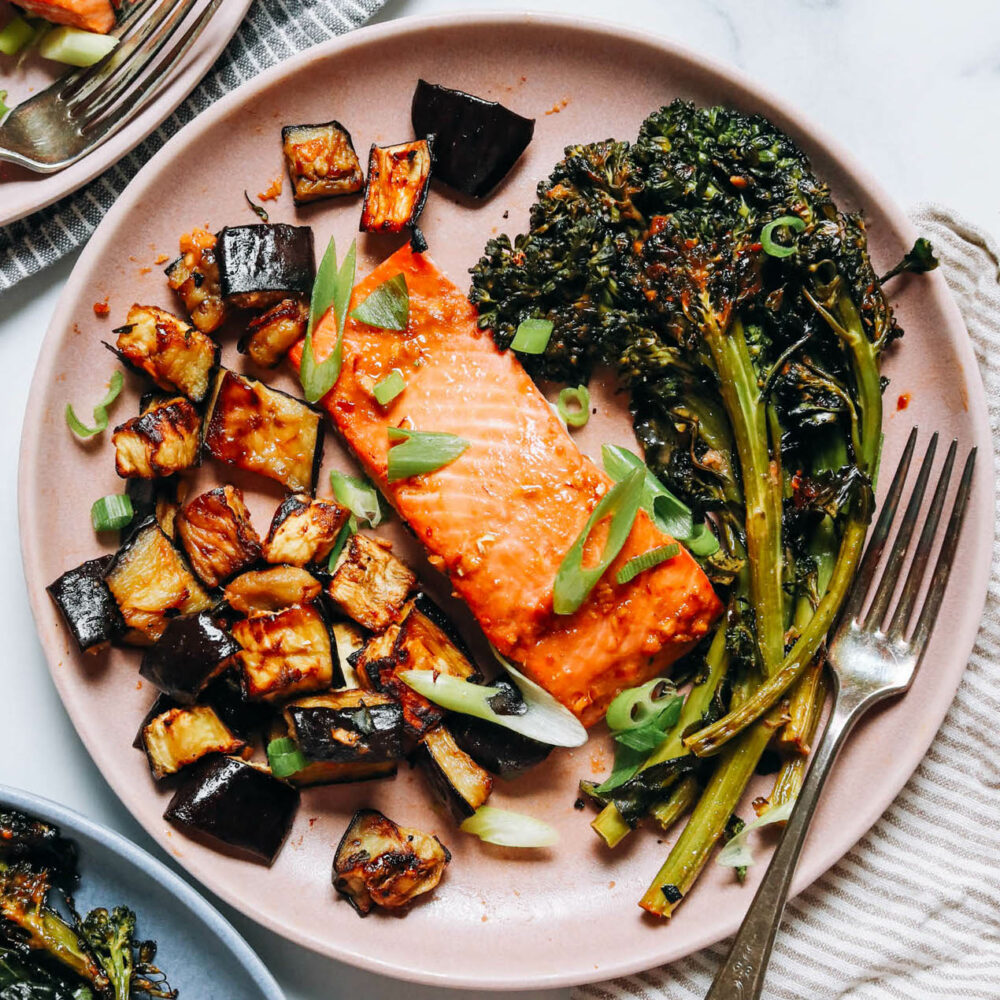
Lean protein. Skinless chicken and turkey, white fish, salmon, eggs, Greek yogurt, tofu, lentils, and chickpeas are consistently recommended. Getting enough protein matters more on GLP-1s because reduced appetite raises the risk of losing muscle mass along with fat; guidance from Mayo Clinic recommends 1.2 to 1.6 grams of protein per kilogram of body weight per day for people actively losing weight on these medications, notably higher than the standard 0.8 g/kg/day guideline (Mayo Clinic).
Fiber-rich vegetables and fruit. Broccoli, carrots, Brussels sprouts, spinach, kale, bell peppers, berries, apples, pears, and citrus fruits are commonly recommended for their fiber and nutrient content, which supports blood sugar regulation (Healthline).
Whole grains. Oats, brown rice, barley, and quinoa support digestion and blood sugar regulation (Healthline; Ohio State Health).
Healthy fats. Avocados, nuts, olive oil, chia seeds, and flaxseeds round out a GLP-1-friendly plate (Healthline).
Hydration. Ohio State Health recommends at least 64 ounces of water daily, or sugar-free herbal tea, since fluid intake tends to drop along with food intake (Ohio State Health).
What to Limit on GLP-1
Added sugar and refined carbs. Sugary drinks, juice, soda, white bread, and pasta can cause blood sugar spikes; one study cited by Healthline found that people with high added-sugar intake saw the smallest increase in GLP-1 levels after eating glucose (Healthline).
Fried and high-fat foods. Deep-fried and greasy foods, along with red meat and full-fat dairy in excess, are commonly flagged because they can worsen GI side effects and work against weight-loss goals (Ohio State Health).
Spicy and acidic foods. These can trigger or worsen heartburn and GI discomfort, both common GLP-1 side effects (Ohio State Health).
Alcohol. GLP-1s and alcohol both affect the liver, which is why several sources recommend limiting or avoiding it (Ohio State Health).
How Common is Undereating on GLP-1?
- GLP-1 users consumed an average of 1,102 calories a day, compared to 1,281 for non-users, about 14% less, according to a study presented at the European Congress on Obesity in April 2026 (photo-tracked food data from 332 adults: 116 GLP-1 users, 216 non-users) (Healio, News-Medical).
- Protein intake dropped to 53.8 grams a day on average, roughly 0.6 g per kilogram of body weight, well under the recommended minimum. 88% of GLP-1 users in the study fell short of that minimum, compared to 69% of non-users.
- Meal skipping was common: GLP-1 users skipped breakfast on 31% of days, lunch on 31%, and dinner on 40%, compared to 16%, 18%, and 30% for non-users, respectively.
- A separate peer-reviewed study of 69 GLP-1 users, published in Frontiers in Nutrition using 3-day food diaries, found an average fiber intake of 14.5 grams a day, about half the recommended 28 grams (Frontiers in Nutrition).
- In that same study, only 43% of participants met even the lower-end 1.2 g/kg protein target.
This isn’t a small or rare problem; it’s the norm for people on these medications, and it’s exactly the gap this guide and the tools behind it exist to close.
Why Eating Well on GLP-1 Takes More Than a Grocery List
Knowing the list above is one thing. Applying it meal after meal, on a reduced appetite, while still hitting a protein target and avoiding trigger foods, is a different problem, and the data above shows most people don’t manage it on their own. That gap between knowing what to eat and actually building meals around it is exactly where food data and recipe tools come in, and it’s a large part of why GLP-1 companion apps have become their own product category.
The Technology Behind Eating Well on GLP-1
Food Database: Knowing What’s Actually in Your Food
Following the guidance above depends on knowing, accurately, what’s in the food someone is buying or eating: how much protein is really in that yogurt, how much added sugar is in that granola bar. Edamam’s Food Database returns nutrient-level data (macros, vitamins, and minerals) for individual foods and grocery products, which is the layer that lets an app tell a user whether a specific item fits their protein or fiber target rather than leaving them to guess from a label.
Recipe Search: Finding Meals That Fit
Once someone knows what to prioritize, the next problem is finding meals that actually deliver it. Edamam’s Recipe Search covers over 2.3 million recipes with full nutrition data and supports filtering by diet and health labels, which is what makes it possible to surface GLP-1-friendly meals, high in protein and fiber, rather than browsing generic recipe content. Edamam doesn’t label or market these as “GLP-1 recipes,” since that would imply a direct medical claim tied to a prescription drug; instead, recipes are filtered and described by their actual nutritional attributes.
Meal Planner: Turning Data Into a Plan
Knowing what to eat and finding recipes that fit still leaves the work of turning that into an actual week of meals. Edamam’s Meal Planner is built to generate personalized meal plans from calorie targets, nutrient limits, and diet or health label preferences, and can produce shopping lists from those plans.
Licensed Recipes
In addition to the above solutions, for companies who do not want to use an API and prefer to build recipe and meal recommendations on their own, Edamam provides licensed recipe content. Customers can select the recipes based on specific criteria (e.g., more than 30 g of protein per serving, more than 10 grams of fiber per serving). Edamam offers different recipe datasets, from professionally developed recipes to AI-enhanced recipes, and data for web recipes.
Case Study: Why Noom Trusts Edamam to Source GLP-1 Friendly Meals
Noom, one of the biggest weight-management companies in the world (it reached $1 billion in annual recurring revenue in 2023, and together with WeightWatchers accounts for roughly 60% of global weight-loss app revenue), began selling GLP-1 medications through its own program in September 2024. To support those users, Noom licensed several thousand ready-made recipes from Edamam, curated for being high in protein and high in fiber, making them GLP-1 friendly. Customers can look through and search these recipes directly in the app.
Making GLP-1-Friendly Eating Work in Practice
Eating well on GLP-1 comes down to a short list of priorities: enough protein and fiber, fewer empty calories, steady hydration, done consistently on a smaller appetite, something the data shows most people struggle with on their own. Getting there in practice is where food data, recipe search, and meal planning tools do the real work. Edamam’s Food Database, Recipe Search, and Meal Planner are built for exactly that job: turning general guidance about what to eat on GLP-1 into specific, findable, GLP-1-friendly meals people can actually plan, shop for, and cook.
FAQ
Q: What foods should I eat on GLP-1 medications?
A: Prioritize lean protein (chicken, fish, eggs, Greek yogurt, legumes), fiber-rich vegetables and fruit, whole grains, and healthy fats like avocado, nuts, and olive oil. These support the higher protein needs and blood sugar stability that matter most while on GLP-1s. Your doctor or dietitian can help set the right protein and calorie targets for you.
Q: What foods should I avoid on GLP-1?
A: Limit added sugar, refined carbs, fried or greasy foods, spicy and acidic foods, and alcohol. These can worsen common GLP-1 side effects like nausea, bloating, and heartburn, and can work against weight-loss goals.
Q: How many people actually undereat on GLP-1 medications?
A: Real-world data suggests it’s common, not rare. One study found GLP-1 users ate about 14% fewer calories than non-users, and 88% fell short of recommended protein minimums. A separate study found average fiber intake at about half the recommended amount.