

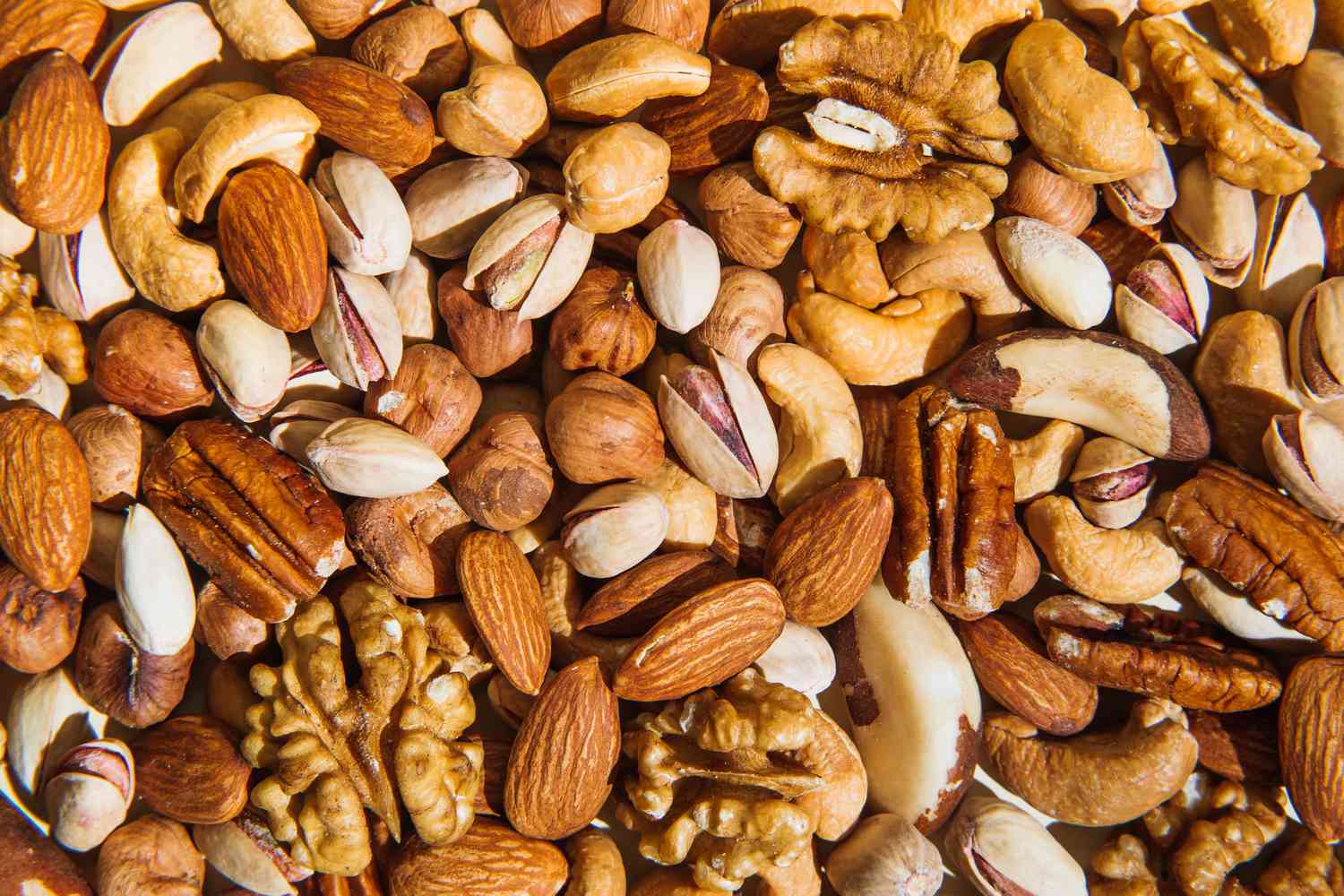
Nuts are packed with protein, fiber, healthy fats, and key micronutrients, which is why they can be a smart snack. Although they are calorie-dense, they can still support weight control when eaten in recommended portions, rather than causing extra weight gain.
That’s because the best nuts for weight loss help keep you full and satisfied. The mix of protein, fiber, and healthy fats supports satiety, making it easier to manage hunger and avoid overeating.
Table of Contents
Key Takeaways:
- Nuts can support weight control because their protein, fiber, and healthy fats help with satiety.
- Portion size matters most because they’re calorie-dense– use nuts to replace less healthy snacks.
- Almonds and pistachios are especially weight-loss friendly for fullness and portion control.
- Choose raw and unsalted nuts.
Why Nuts Can Be Good for Weight Loss
Nuts can help with weight loss for a few specific reasons. Research shows that their protein and fiber can increase satiety, reducing hunger after eating.
The fiber in nuts also slows gastric emptying. In simple terms, food leaves the stomach more slowly, so you stay full for longer.
Nuts are also rich in unsaturated fats, which are linked with better heart and metabolic health. They also contain antioxidants and other plant compounds that can reduce oxidative stress and inflammation.
That matters because obesity is associated with chronic low-grade inflammation and oxidative stress, which can worsen metabolic health. Lowering those burdens may support a healthier environment for weight regulation over time.
When eaten in the recommended portions, nuts can fit well into a balanced diet.
Fat and Calorie Content in Nuts
Nuts are naturally high in calories because they are rich in fat. Since fat provides 9 calories per gram (more than protein or carbs, which provide 4), even a handful of nuts can add up quickly.
Most of the fat in nuts is unsaturated, the type linked to better heart health. That includes monounsaturated fats and polyunsaturated fats, both of which support healthy cholesterol levels when they replace less healthy fats in the diet. So while nuts are calorie-dense, their fat content is not a reason to avoid them – it just means portion size matters.
| Type of Nut | Calories per Serving | Total Fat per Serving |
| Almonds | 174 | 15g |
| Pistachios | 168 | 13.6g |
| Walnuts | 196 | 19.6g |
| Cashews | 160 | 12.7g |
| Hazelnuts | 188 | 18.2g |
| Peanuts | 170 | 14.8g |
Almonds for Weight Loss:
Almonds are among the best nuts for weight loss because of the good balance between protein, fiber, and healthy fats in a small serving. A PubMed research report states that almonds may help reduce hunger, support fullness, and fit well into weight-loss diets without promoting extra weight gain.
They also stand out because the research on almonds is more extensive than for many other nuts. Recent reviews found that almonds were the only nut linked with a small but significant reduction in body weight and fat mass compared with control diets.
They have also been studied specifically in women with PCOS, a condition commonly associated with insulin resistance and increased inflammation. In a randomized trial, women with PCOS who ate almonds daily for six weeks saw a reduction in free androgen index, a key hormonal marker of the condition.
A simple way to eat them is a small handful on their own, or added to yogurt, oats, or salads.
Pistachios for Weight Loss:
Pistachios work well for mindful snacking. They’re nutrient-dense and provide fiber and mostly unsaturated fats. They also contain antioxidant compounds and are a notable source of vitamin B6 and potassium.
Antioxidants can help lower inflammation, which may support weight loss by improving metabolic health and blood sugar control. Lower inflammation can also support better energy and recovery, making it easier to stay consistent.
Their shells add another advantage: peeling them naturally slows down eating and can help with portion control.
Enjoy pistachios as a snack between meals or add them to salads and yogurt. Choose plain, in-shell, and unsalted options.
Walnuts for Weight Loss:
Walnuts are a great brain- and heart-healthy nut. They’re very nutrient-dense, with fiber, mostly unsaturated fats, and they’re especially rich in ALA omega-3s (a plant omega-3), along with antioxidants and minerals like magnesium and copper.
Supporting lower inflammation can help weight-loss efforts indirectly by improving metabolic health and recovery. Walnuts for weight loss work best as a mindful snack — calorie-dense, but very satiating.
Walnuts have also been studied in women with PCOS, with research showing they improved insulin sensitivity by 26% and reduced glucose levels over six weeks, making them a good option for people managing insulin resistance alongside weight.
If you tend to overeat, choose walnuts in a shell to slow down eating.
Cashews for Weight Loss:
Cashews are a creamy, satisfying nut that’s nutrient-dense and easy to use in snacks and meals. They provide mostly unsaturated fats, some fiber, and key minerals like magnesium, zinc, and copper – helpful for energy metabolism and overall cardiometabolic health.
In one controlled-feeding randomised crossover trial, replacing a typical snack with a serving of cashews for 28 days led to lower total and LDL cholesterol compared with the control diet, suggesting cashews are a heart-friendly swap when they replace less nutritious snacks.
Hazelnuts for Weight Loss:
Hazelnuts are a delicious, heart-healthy nut with a naturally sweet flavor. They are higher in fiber than many other nuts. Fiber helps with satiety, supports steadier blood sugar, and feeds a healthier gut microbiome — all of which can make weight management easier.
Hazelnuts are also an excellent source of vitamin E, and they contain antioxidant compounds that support lower inflammation.
Peanuts for Weight Loss:
Peanuts are a protein-rich “nut” (technically a legume) that can be a very practical option for everyday snacking.
They’re nutrient-dense, offering protein, fiber, and unsaturated fats, which together help you feel full and satisfied. That satiety effect can support weight goals by reducing cravings and making it easier to stick to a balanced intake.
Which Nuts to Avoid:
Sugar-coated and heavily salted nuts don’t carry the same benefits as raw or unsalted ones. Added sugar and excess salt can quickly turn a nutrient-dense snack into something easy to overeat and less supportive of overall weight goals.
Best Nuts for Weight Loss
For weight loss, the “best” nuts are the ones you can eat consistently in the right portion. Nuts are calorie-dense, but they can support fat loss because the mix of fiber, protein, and healthy fats helps you feel full longer, reduces cravings, and makes snacking more controlled.
Among the better choices are almonds, pistachios, and walnuts — they’re especially satisfying.
FAQ
Q: Which nut burns the most fat?
A: No nut literally burns fat on its own. Fat loss mainly comes from a calorie deficit. But some nuts can support that goal by keeping you fuller and helping you snack less. Pistachios and almonds are good picks because they’re satisfying and easy to portion. Walnuts can also help because their fat profile supports overall diet quality. The best “fat-burning” nut is the one you can eat consistently in small servings.
Q: Can I eat nuts to lose belly fat?
A: Yes, you can eat nuts and still lose belly fat, as long as your overall calories support fat loss. Nuts won’t target belly fat specifically, but they can help you stay full and reduce snacking on sugary foods. Keep portions small because nuts are calorie-dense. Aim for a small handful of raw or unsalted options.
Q: Should I avoid nuts if I want to lose weight?
A: No, you don’t need to avoid nuts if you want to lose weight. Even though they’re calorie-dense, nuts can work well for weight loss because they’re filling and nutrient-rich. The key is portion control. Use nuts to replace less healthy snacks instead of adding extra calories.
Q: Which nut is best for muscle gain?
A: For muscle gain, the best nut is usually peanuts because they’re among the highest in protein per serving and easy to eat in larger amounts. Almonds and pistachios are also solid choices. That said, nuts alone won’t cover your protein needs — use them to support calories and nutrients alongside higher-protein foods.